Mode-S Enhanced Surveillance
Introduction
From http://emaddc.com:
A novel method to measure wind and temperature is related to tracking and ranging by an enhanced surveillance (EHS) air traffic control (ATC) radar.
Modern aircraft carry sensors to measure the Mach number (using pitot-static probe) and the total air temperature (T). An EHS radar interrogates all aircraft in sight in a selective mode (Mode-S), on which the aircraft replies with a message containing, for example, magnetic heading, airspeed and Mach number. From this information wind and temperature can be extracted.
Mode-S EHS data
Description
The data description is available here: KNMI data platfrom
Access
Access to (European) Mode-S EHS data can be requested from KNMI through KNMI data platfrom access
Prepare the BUFR data
BUFR data sub-category change
At present the BUFR-sub category needs to be changed: bufr_set, an ecCodes tool, can be used to change the data sub-category from 146 to 147. This is required by HARMONIE.
bufr_set -sdataSubCategory=147 Mode-S-EHS_MUAC_20170507_2345.bufr Mode-S-EHS_MUAC_20170507_2345_147.bufrHARMONIE changes
scr/include.ass
In scr/include.ass should be edited to "switch on" the use of Mode-S EHS data:
export MODESEHS_OBS=1 # Mode-S EHSProcessing using Bator
The BUFR template (WMO AMDAR v7) used by your Mode-S EHS data should be defined in the param.cfg file used by Bator. param.cfg files for Bator are in the nam namelist directory. The modes param.cfg template should be something like this:
BEGIN amdar

END
Processing using Oulan
The processing of Mode-S EHS BUFR using Oulan is controlled by the following namelist entry in scr/Oulan:
LMODES=.FALSE.Thinning of Mode-S
Thinning of a bufr file
A collection of python scripts which directly thin the Mode-S csv and bufr file is uploaded here https://gitlab.com/haandes/emaddc-public.
E.g. the emaddcc-thinning4.py script works with the large Mode-S_EMADDC_KNMI_oper_${DTG}.bufr file and thins the data in 4 dimensions, horizontal, vertical and in observation time closest to analysis time. 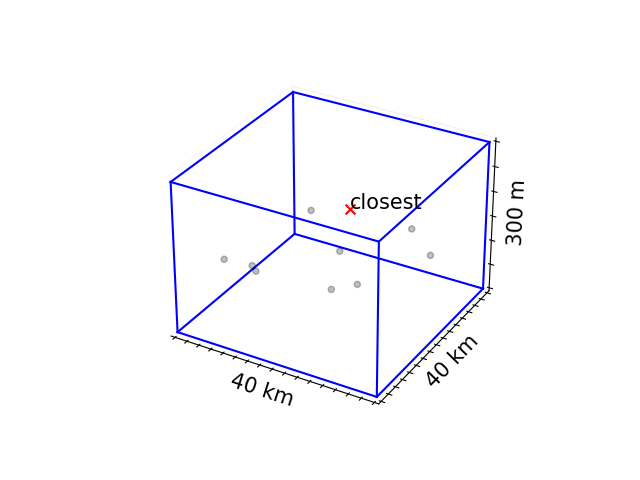
Emaddcc-thinning4.py currently assumes valid temperature and wind observations at the same time and fix vertical thinning intervals of:
[300, 300, 600, 1000] m which corresponds to the heights of the lowest, second lowest, third lowest and all above boxes. The horizontal box width is variable and in the following example 40 km.
The .py script is triggered in scr/Prepare_ob, with:
  nMsgs=`bufr_count $OBDIR/Mode-S_EMADDC_KNMI_oper_${DTG}.bufr`
  time python3 $HM_LIB/scr/emaddcc_thinning4.py --infile $OBDIR/Mode-S_EMADDC_KNMI_oper_${DTG}.bufr --box_width 40 --DTG $DTG --nMsgs $nMsgs --outfile emaddcc_thinned.bufr
  cat emaddcc_thinned.bufr  /dev/null >> $BUFRFILE
It takes about 1:35 min on Atos-Bologna and results in reduction of Mode-S data by a factor of 4-5.